|
I am a Robotics Researcher at the Honda Research Institute, where I currently lead and contribute to a project focused on online learning for dexterous manipulation in the real world. I am particularly interested in online planning and data-efficient real-world learning for tasks in which teleoperation demonstrations are not possible and in settings where direct sim-to-real approaches fail.
I received my Ph.D. from Northwestern University in 2024, where I was advised by Kevin Lynch and Jose Pons. During my Ph.D., I worked on interaction force controllers for lower-limb exoskeletons and introduced a novel gait rehabilitation paradigm that enables real-time shaping of gait through bidirectional feedback.
I also hold a robotics-focused master’s degree from ETH Zürich, where I completed my thesis at the Robotic Systems Lab. I have extensive research and hands-on experience with robots that physically interact with their environments.
|
Selected Works
-
Real-World Reinforcement Learning with MPC Scaffolding for Dexterous Manipulation
Emek Barış Küçüktabak*, Karankumar Patel*, Zhaodong Yang*, Jinda Cui, Kazuhiro Sasabuchi, Jun Takamatsu
Honda Research Institute, 2025-2026
TLDR |
Webpage |
Paper |
Video
TLDR:
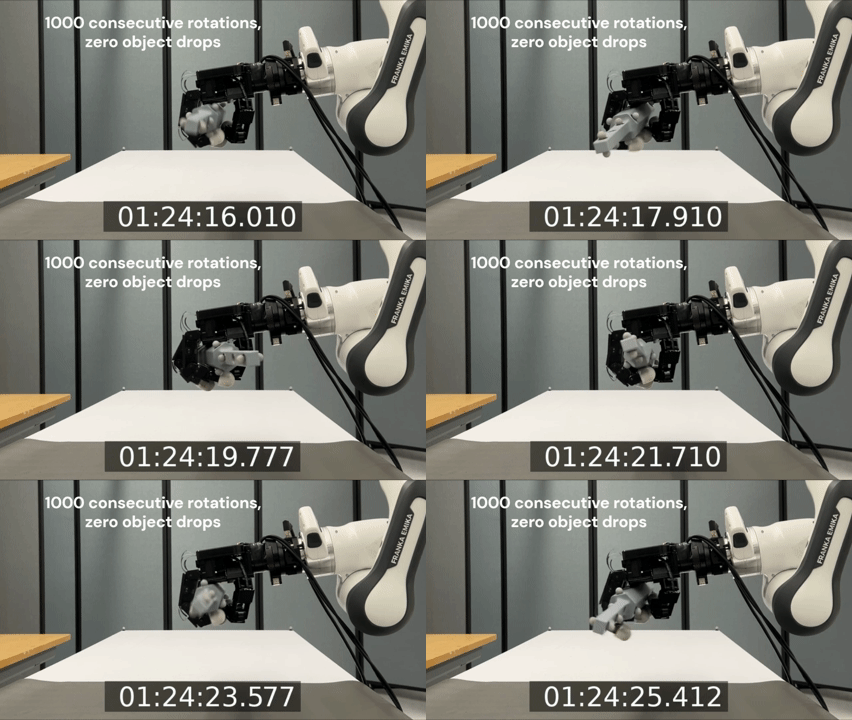
- Uses sampling-based MPC to pretrain and intermittently guide an off-policy RL agent, enabling structured real-world exploration without human demonstrations or corrective actions.
- On continuous in-hand rotation with a 16-DoF Allegro hand, the policy reaches 100% success after 7 minutes of online RL using 20 MPC trajectories collected in 12 minutes.
- After 20 minutes of learning, the policy rotates more than five times faster than MPC, completes 1,000 consecutive rotations without a drop, and rapidly adapts to new objects and goal-conditioned reorientation.
-
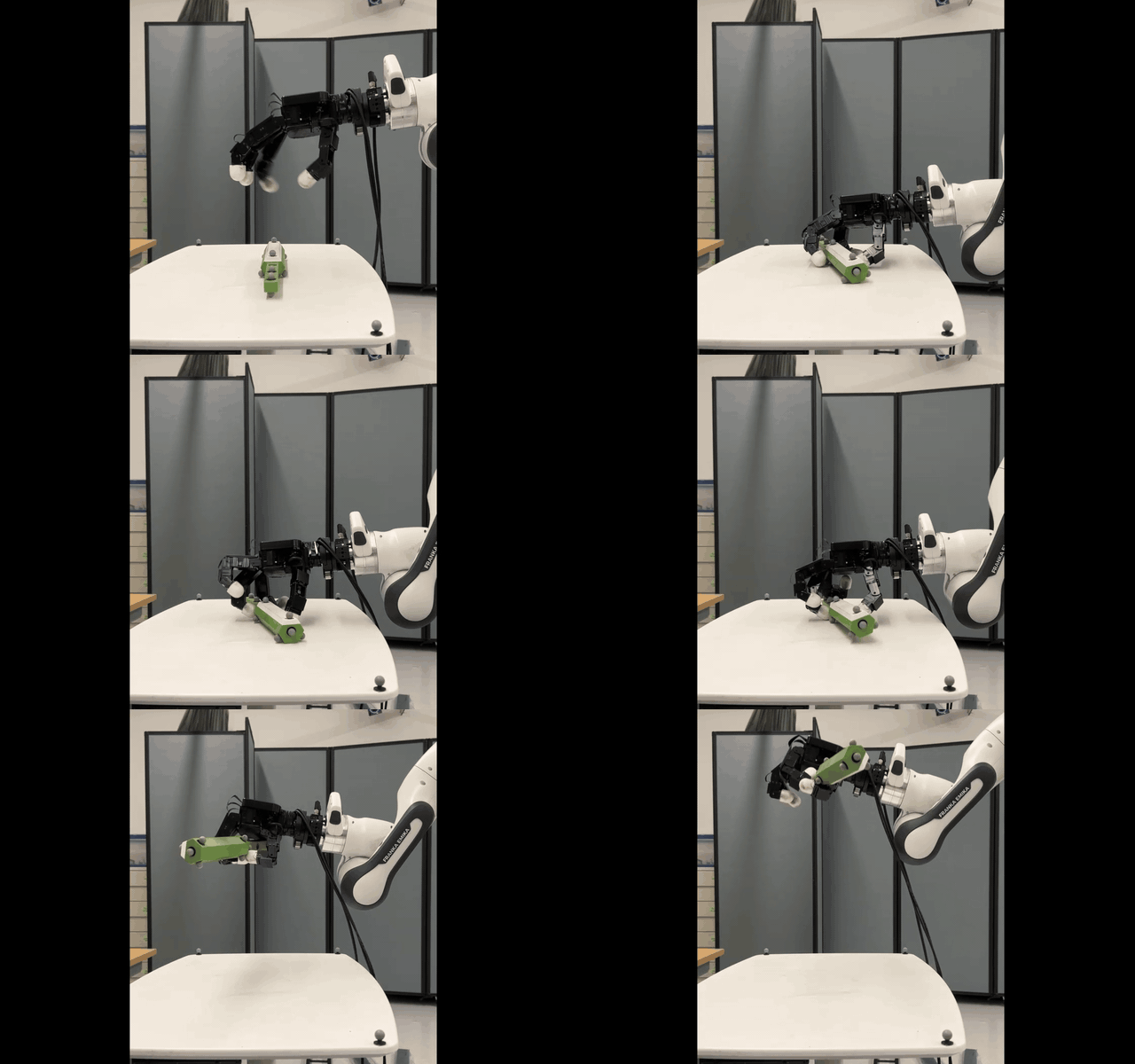
Primitive-Informed Sampling-Based MPC for Multi-Fingered Dexterous Manipulation
Emek Barış Küçüktabak, Karankumar Patel, Jinda Cui, Zhaodong Yang, Kazuhiro Sasabuchi, Jun Takamatsu
Honda Research Institute, 2025-2026
TLDR |
Webpage |
Paper |
Video
-
Therapist-Exoskeleton-Patient Interaction for Gait Therapy
Emek Barış Küçüktabak†, Matthew R. Short†, Lorenzo Vianello†,
Daniel Ludvig, Levi Hargrove, Kevin Lynch, Jose Pons
Science Robotics, 2026
TLDR |
Paper |
Fox Chicago |
WGN-TV |
Video
TLDR:
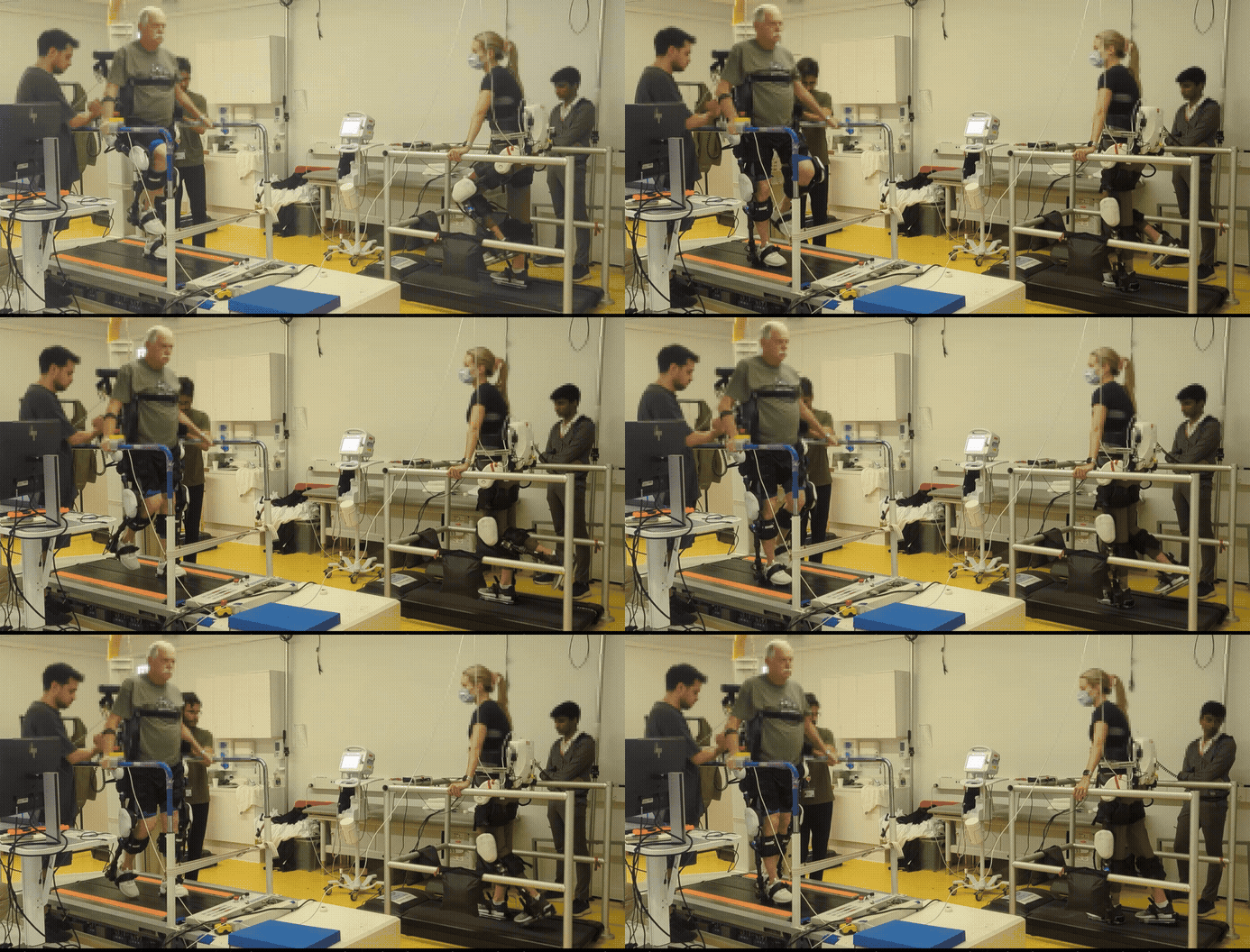
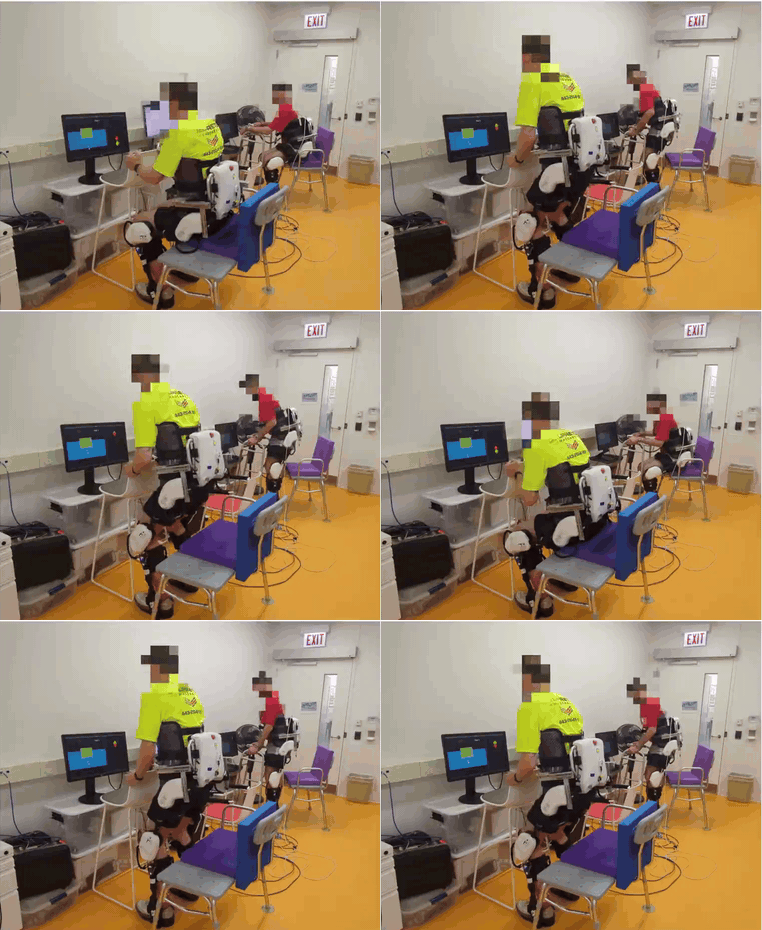
- Introduced a novel gait therapy framework, where a therapist and post-stroke patient wear lower-limb exoskeletons virtually connected at the hips and knees through spring-damper elements.
- The bidirectional haptic connection lets the therapist guide the patient's gait while receiving real-time physical feedback about the patient's movement.
- In eight chronic post-stroke participants, TEPI produced larger joint range of motion, step length, and step height than conventional manual therapy while maintaining active participation and high patient motivation.
-
Haptic Transparency and Interaction Force Control for a Lower-Limb Exoskeleton
Emek Barış Küçüktabak, Yue Wen, Sangjoon J Kim, Matthew R Short, Daniel Ludvig,
Levi Hargrove, Eric J Perreault, Kevin Lynch, Jose Pons
IEEE Transactions on Robotics, 2024
TLDR |
Paper |
Video
TLDR:
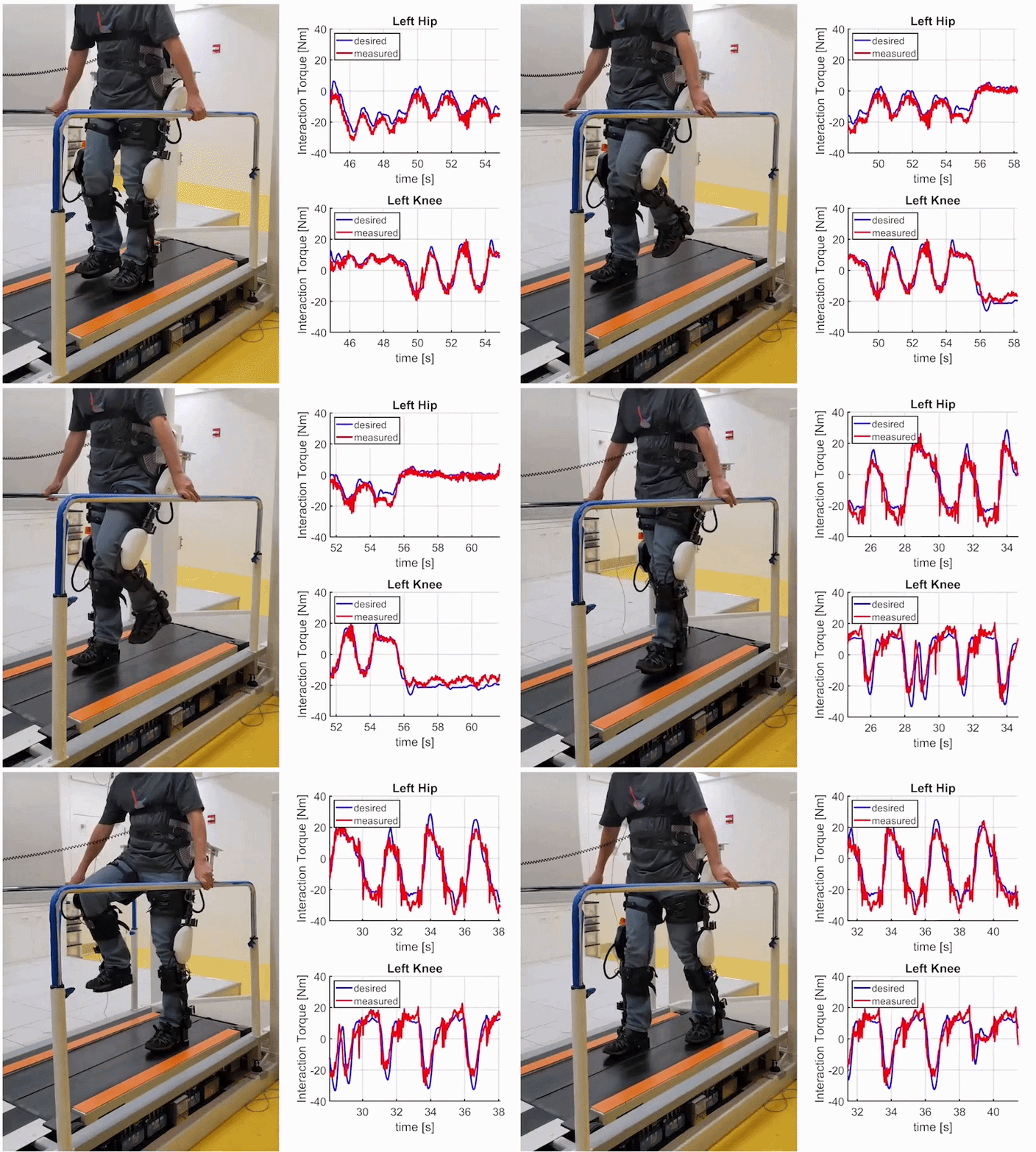
- Introduced whole-exoskeleton closed-loop compensation (WECC) to estimate interaction torques across the full gait cycle using whole-body dynamics and joint torque measurements.
- Tracks desired interaction torques through constrained optimization, enabling transparent, assistive, or resistive behavior while respecting physical and safety limits.
- Experiments with three subjects showed consistently low torque-tracking error for both zero and nonzero interaction torques, outperforming a simplified dynamic model and passive exoskeleton behavior.
-
Virtual Physical Coupling of Two Lower-Limb Exoskeletons
Emek Barış Küçüktabak, Yue Wen, Matthew R Short, Efe Demirbas,
Kevin Lynch, Jose Pons
IEEE International Conference on Rehabilitation Robotics (ICORR), 2023
TLDR |
Paper |
Video
TLDR:
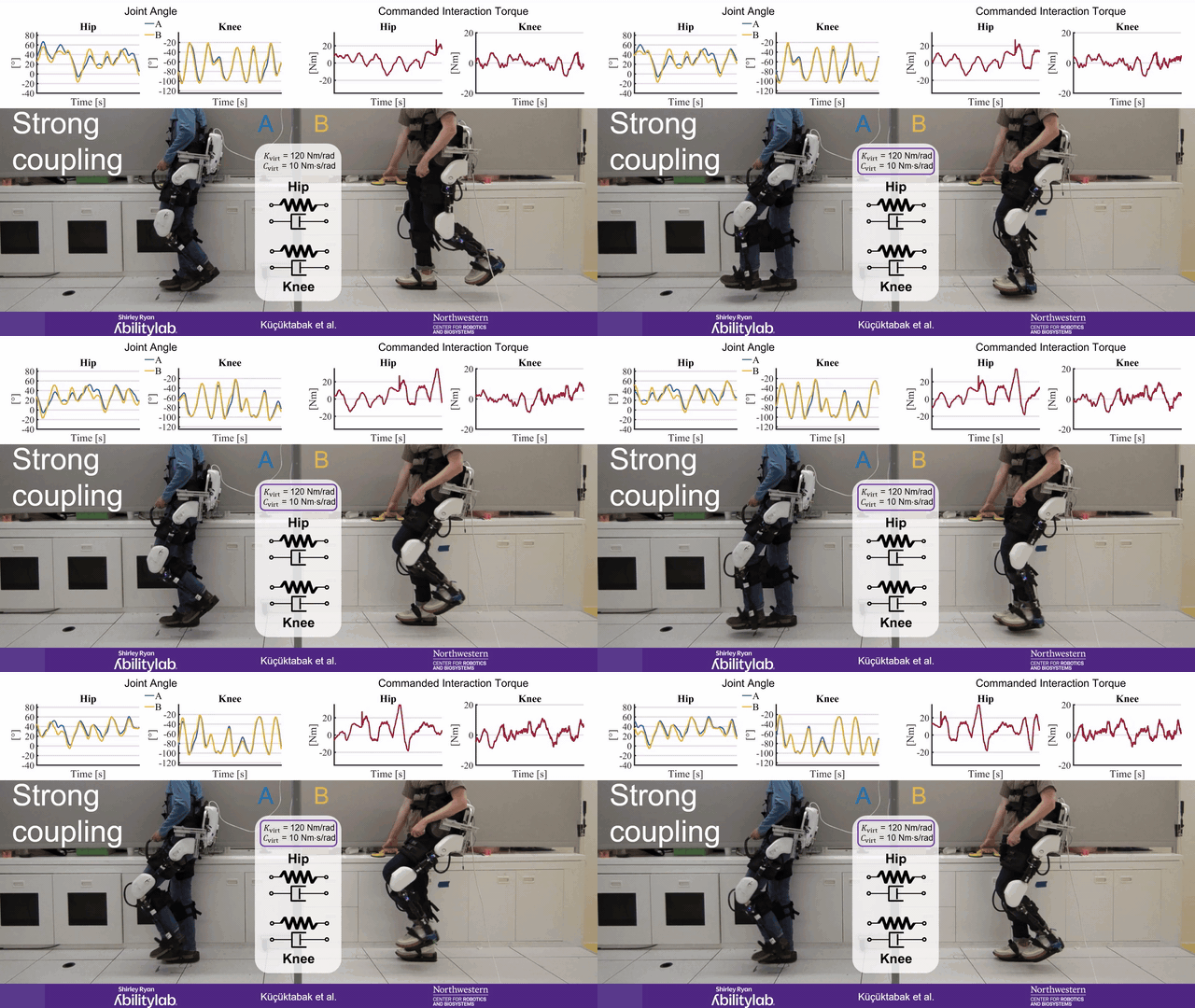
- Developed a system that renders haptic interaction between two users walking in multi-joint lower-limb exoskeletons by commanding interaction torques from user kinematics and virtual coupling properties.
- Demonstrated soft and hard haptic properties, bidirectional and unidirectional connections, and virtual couplings expressed in both joint space and task space.
- With haptic coupling, dyads generated synchronized movement, and joint-angle differences decreased as virtual stiffness increased.
-
Exoskeleton-Mediated Physical Human-Human Interaction for a Sit-to-Stand Rehabilitation Task
Lorenzo Vianello, Emek Barış Küçüktabak, Matthew Short, Clément Lhoste,
Lorenzo Amato, Kevin Lynch, Jose Pons
IEEE International Conference on Robotics and Automation (ICRA), 2024
(Best Medical Robotics Paper, Best Paper Finalist)
TLDR |
Paper |
Video
-
Towards Dynamic Transparency: Robust Interaction Force Tracking Using Multi-Sensory Control on an Arm Exoskeleton
Yves Zimmermann, Emek Barış Küçüktabak, Farbod Farshidian, Robert Riener, Marco Hutter
ETH Zurich, Master's Thesis, 2018-2019
IEEE International Conference on Intelligent Robots and Systems (IROS), 2020
TLDR |
Master's Thesis |
Paper |
Video
TLDR:
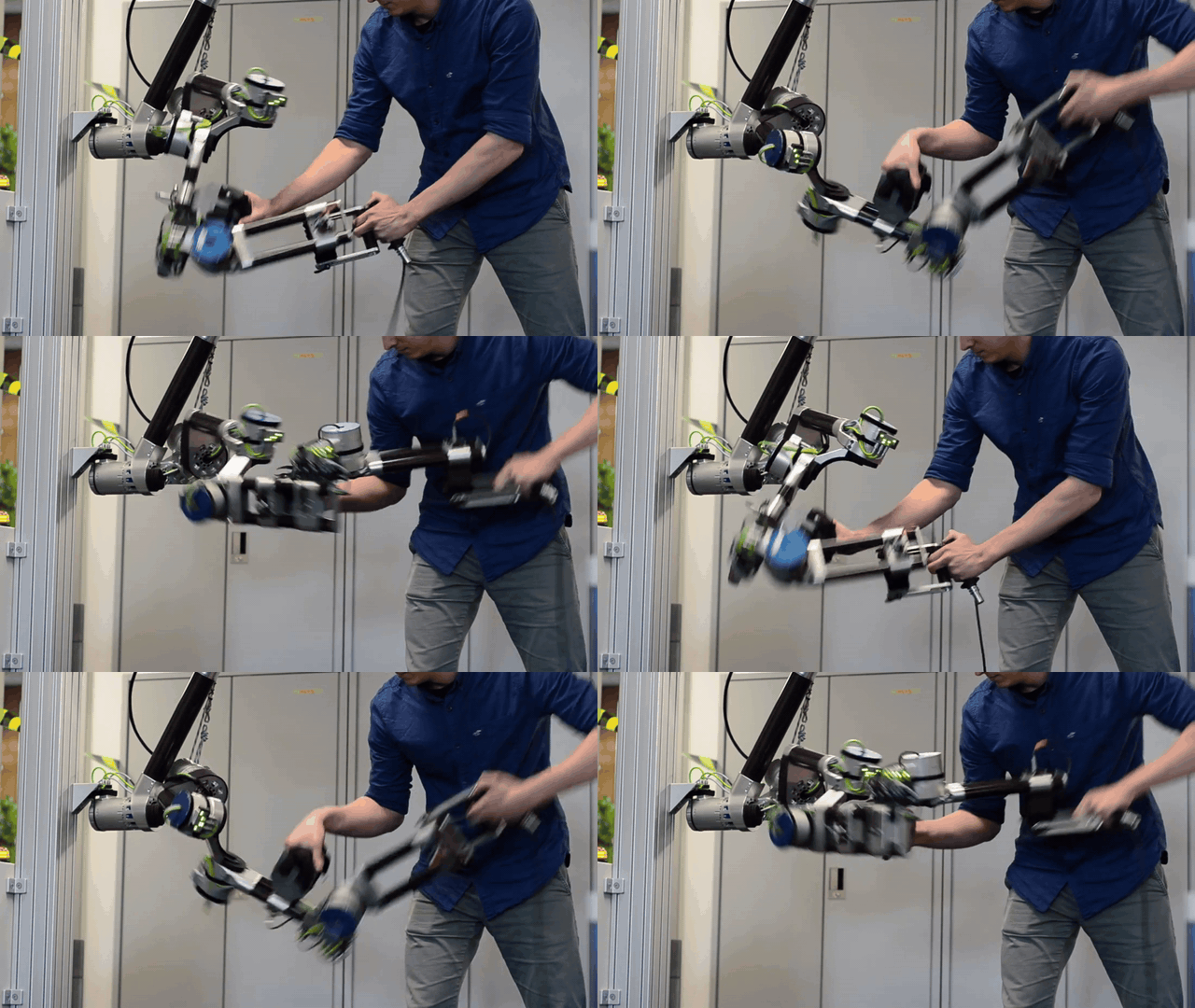
- Introduced a virtual model controller that uses two 6-DoF force sensors, joint accelerations, and inverse dynamics to track interaction wrenches on the multi-DoF torque-controlled ANYexo arm exoskeleton.
- Combined disturbance observation with acceleration estimation from joint encoders and seven IMUs to improve robustness to modeling errors during dynamic human motion.
- Reduced felt inertia and maximum reflected joint torque by more than a factor of three compared with prior transparent controllers, setting a new haptic transparency benchmark for comparable devices.
-
Executing Tasks with a Walking Manipulator: Opening Doors
Emek Barış Küçüktabak.
Advised by Dario Bellicoso, Marko Bjelonic,
Koen Kramer, Marco Hutter
ETH Zurich, Semester Project, 2018
TLDR |
Video
TLDR:
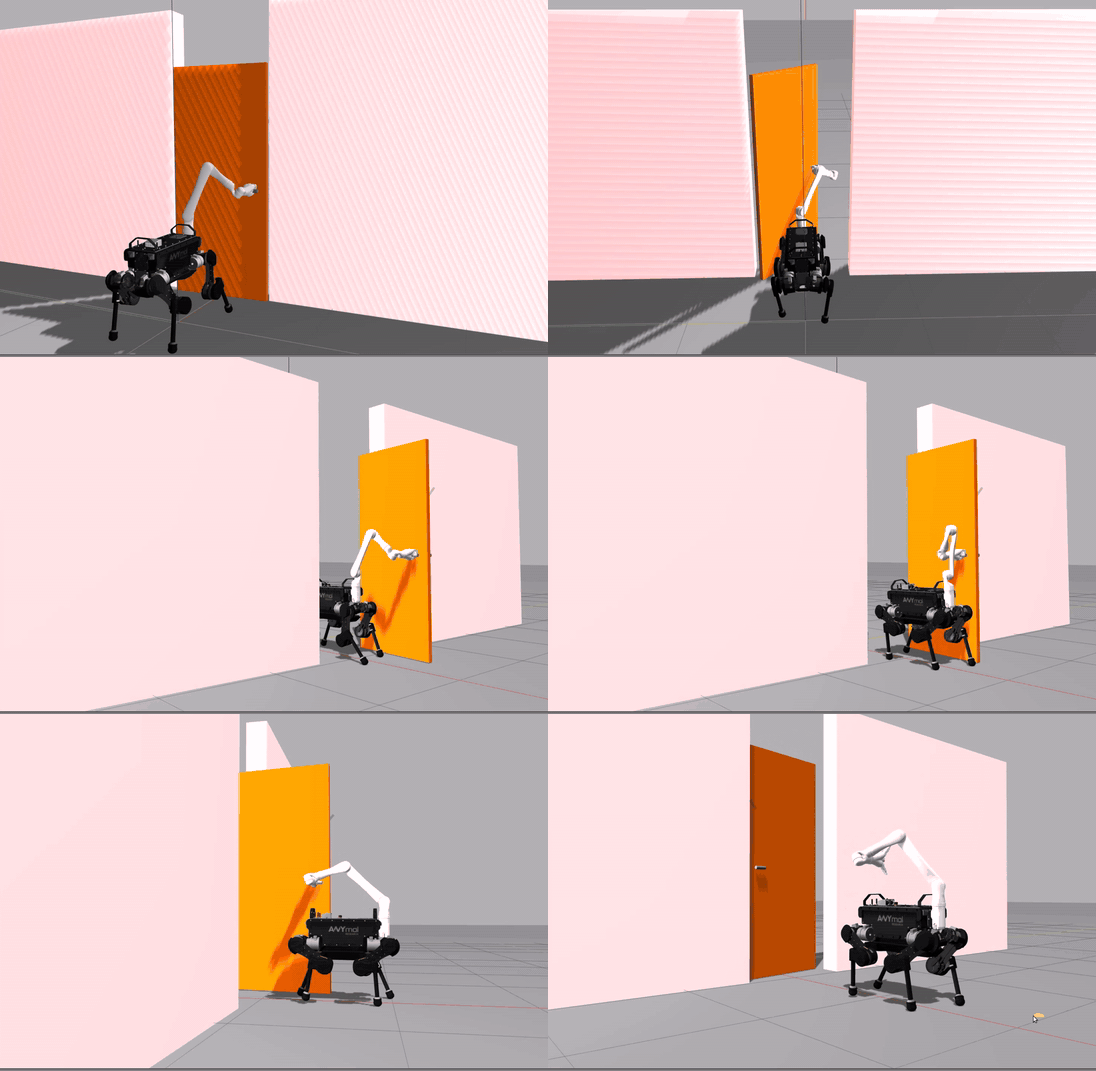
- Developed a door-opening behavior for a walking manipulator, combining a quadruped mobile base with an arm to execute a practical whole-body manipulation task.
- Coordinated base motion and arm motion across the door-opening sequence, including approaching the handle, manipulating the door, and moving through the doorway.
- Evaluated the task with door and manipulator trajectories, demonstrating the feasibility of mobile manipulation on a legged robotic platform.
-
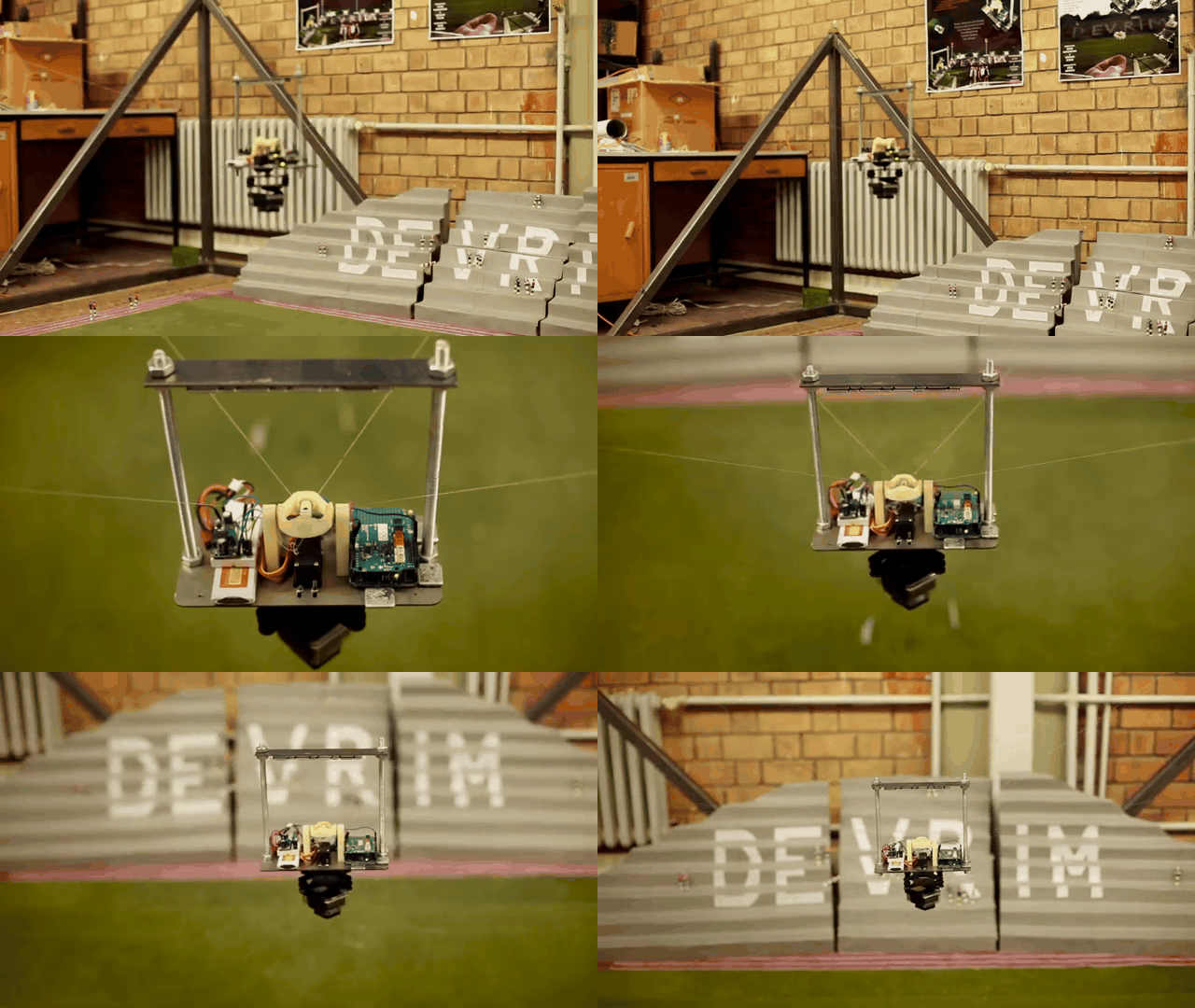
Cable Driven Aerial Camera System
Emek Barış Küçüktabak, Mustafa Melih Pelit, Mustafa Alp,
Zeynep Özge Orhan, Tugay Alperen Karagüzel, Sercan Selçuk
Middle East Technical University, Graduation Project, 2016
TLDR |
Video
TLDR:
- Designed a cable-driven aerial camera prototype that moves a camera payload through a 3D workspace using four motorized cables.
- Developed inverse kinematics to convert desired payload positions and smooth point-to-point trajectories into cable lengths, cable velocities, motor speeds, and motor torques.
- Implemented closed-loop control with DC motors and encoders, using three cables for position control and one cable for torque control to improve payload motion accuracy.
- Integrated the mechanical structure, spools, pulleys, payload stabilization, electronics, and user interface for commanding final position and travel time.
-
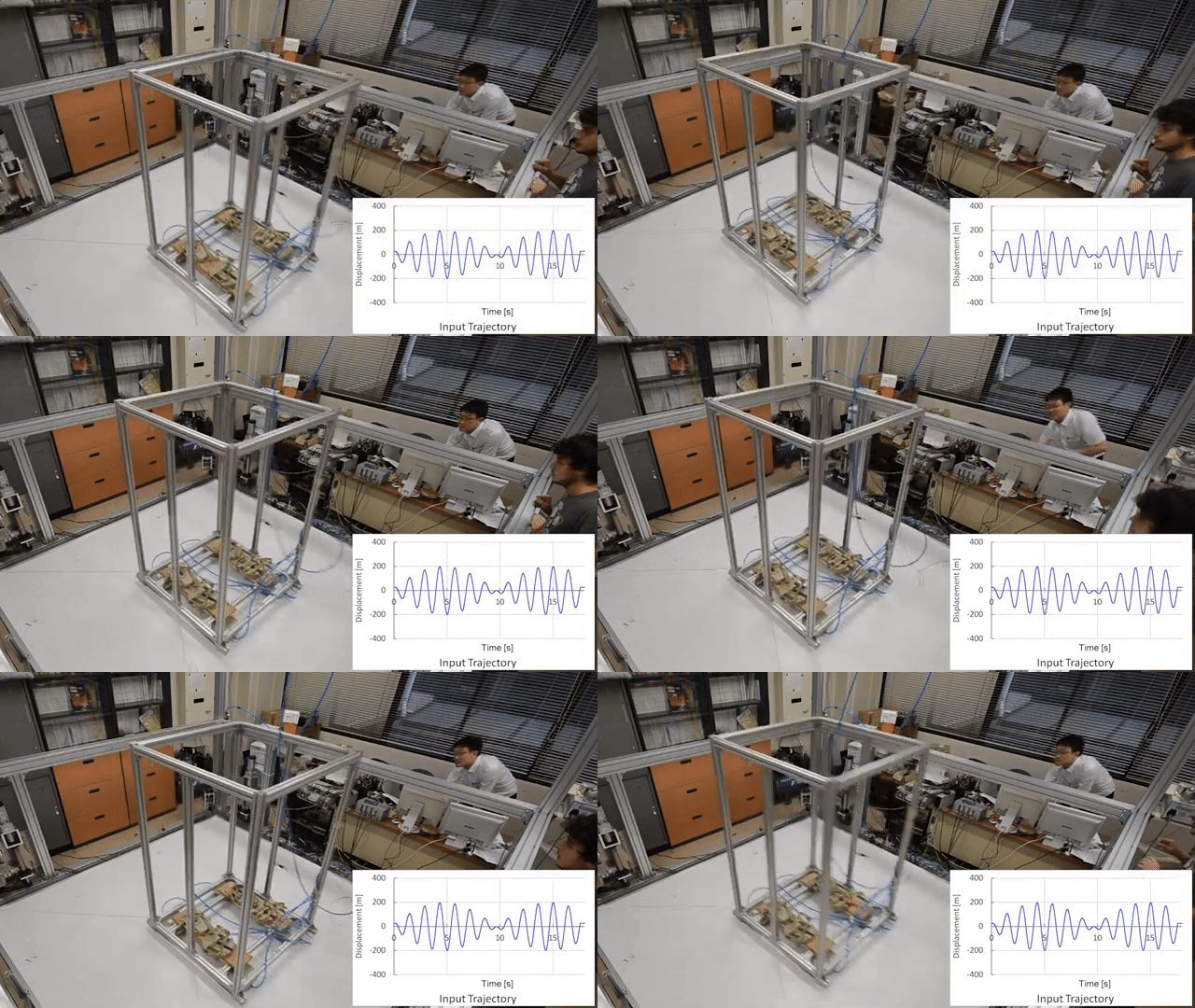
Dynamic Simulations for a Cable Driven Earthquake Simulator
Daisuke Matsuura, Shota Ishida, Muhamad Akramin, Emek Barış Küçüktabak,
Yusuke Sugahara, Yukio Takeda, Nobuo Fukuwa, Minoru Yoshida
Undergrad Research Exhange at Tokyo Institute of Technology, 2015-2016
ROMANSY 21 - Robot Design, Dynamics and Control, 2016
TLDR |
Paper |
Video
TLDR:
- Studied a cable-driven parallel mechanism for reproducing planar earthquake motions with a large, low-inertia, and transportable moving platform.
- Developed dynamic simulations to evaluate cable tensions, normal and friction forces, and tipping risk as a function of cable geometry, center-of-mass height, and friction.
- Used the simulation results to choose stable physical parameters and cable attachment geometry before building the prototype.
- Built and tested a prototype with four cable spool mechanisms, brushless DC servo motors, encoder-based PID feedback at 1 kHz, and cable tension sensing for experimental validation.
-
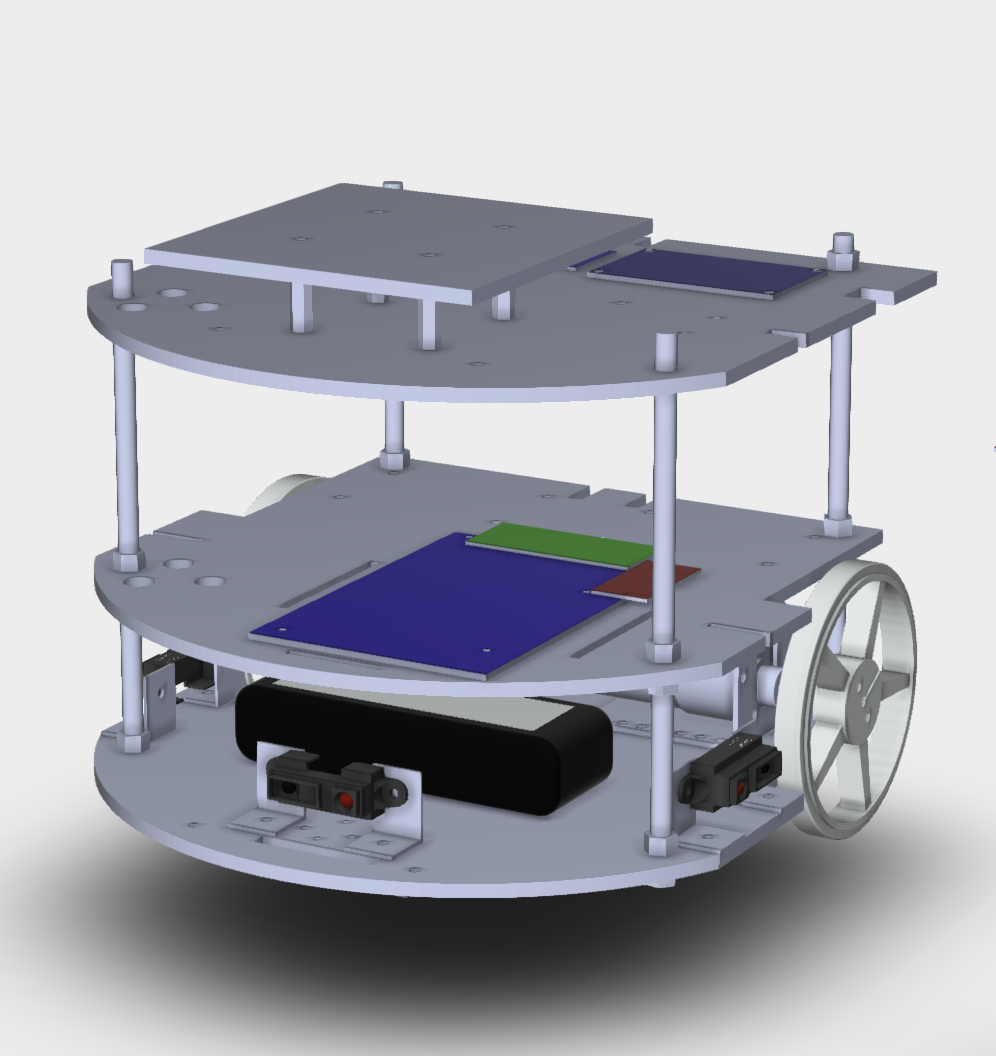
Fire-Extinguishing Robot
Emek Barış Küçüktabak, İhsan Caner Boz, Erdem Canbalaban, Berkay Baykara
Middle East Technical University Robotics Society, 2013
TLDR
TLDR:
- One of my first robots.
- Used distance sensors for wall following to scan an enclosed area with multiple rooms.
- Detected fire with an infrared sensor, extinguished it with a fan, and verified that the flame was out.
- Old times, couldn't find the original photos or videos.
(Winner of Istanbul Technical University Robot Olympics)
|
|